
Kesar vs Alphonso — Which Mango Should You Buy?

Abhilash Kasliwal

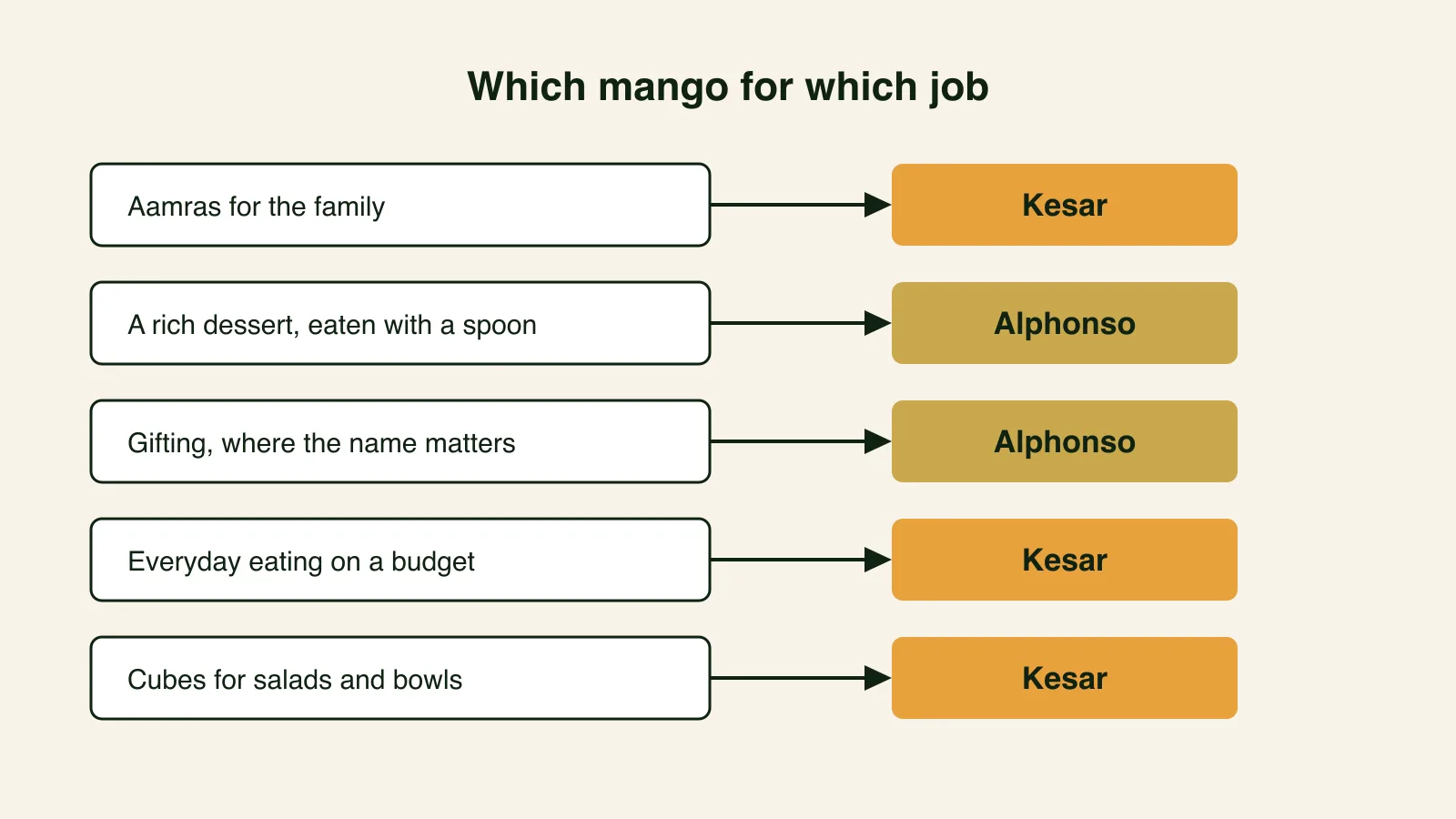
Both are elite mangoes, and neither choice is a mistake. Alphonso is the softer, more buttery fruit — a deep, low-acid sweetness and a melting texture that made it India's most famous mango. Kesar is firmer and more aromatic, with a saffron-like fragrance and a sweet-tang balance, and it costs far less delivered: online Alphonso sellers typically start around ₹1,000 per kg, while farm-direct Kesar, ours included, sells at ₹300. Buy Alphonso for an occasional indulgence or a gift where the name matters; buy Kesar for family eating, aamras and everyday value through the season.
One thing to declare before anything else: we grow Kesar, and only Kesar, in Marathwada. Read what follows knowing that. We have tried to be fair, and we will say plainly where Alphonso wins.
Where each mango comes from
Alphonso comes from the Konkan coast — Ratnagiri and Devgad in coastal Maharashtra — where laterite soil and sea air produce its famously delicate fruit. Kesar's original home is the Girnar foothills near Junagadh in Gujarat, where it was named in 1934 for its saffron-coloured flesh. The variety later travelled east into Marathwada, the dry Deccan interior of Maharashtra, where our orchard stands. Both Kesar belts now hold Geographical Indication tags: Gir Kesar received its GI in 2011, and Marathwada Kesar was distinctive enough to earn one of its own in 2016.
Which mangoes are tasty — Alphonso or Kesar?
This exact question has run on Quora for years, which points to the honest answer: it depends on what you want a mango to do.
Alphonso's flesh is nearly fibreless and soft to the point of being spoonable. The sweetness is deep and rounded, with very little acidity to interrupt it, and the aroma is heavy and floral. Eaten chilled with a spoon, it behaves like a dessert that happens to grow on a tree.
Kesar keeps more structure. The pulp is smooth but firm enough to cube, the flesh is a deeper saffron-orange, and the aroma is the variety's signature — it is literally named after saffron. The sweetness is just as present but carries a mild tang underneath, which stops it from cloying. People who find Alphonso too rich after half a fruit tend to prefer Kesar; people who want maximum lushness go the other way.
Texture matters in the kitchen too. Alphonso collapses into purees beautifully but loses shape when cut. Kesar holds a cube, which makes it the better fruit for salads, breakfast bowls and any dish where mango pieces need to stay pieces.
Trait | Kesar | Alphonso |
|---|---|---|
Aroma | Saffron-like, distinctive | Heavy, floral, rich |
Taste | Sweet with a mild tang | Deep sweet, low acid |
Texture | Firm, smooth, cubes well | Soft, melting |
Season | Mid-April to late June | Typically March to May |
Typical online price | ₹300–1,000 per kg | ₹1,000 per kg and up |
Why is Alphonso three times the price?
Part of it is earned. Alphonso carries a century of reputation and export demand — for many buyers abroad, Alphonso simply is the Indian mango — and genuine Ratnagiri and Devgad fruit comes from a limited coastal belt with high land and labour costs. Part of it is fragility: Alphonso bruises easily and moves from ripe to overripe quickly, so more fruit is lost between orchard and doorstep, and the boxes that survive carry that cost.
And part of it is murkier. The premium makes Alphonso the most mislabelled mango in India — it is widely reported that other varieties are routinely sold under the name, and a suspiciously cheap "Alphonso" online is usually not Alphonso. Kesar benefits from never having become a status symbol: there is little money in faking it, so what you order is overwhelmingly what arrives.
Where each one wins
For aamras, we would argue for Kesar even if we did not grow it. The deep colour, the saffron aroma that survives mixing, and the tang that keeps a rich, poori-heavy meal from going flat are why Gujarati and Maharashtrian households have leaned Kesar for generations. Alphonso aamras is excellent and noticeably richer — if you like yours closer to custard, it is the better choice.
For eating plain, it is preference: Alphonso if you want richness, Kesar if you want balance and a second helping. For milkshakes and lassi, we find Kesar's tang survives dilution in milk better than Alphonso's low-acid sweetness, which can turn flat — our view, but a common one.
For gifting, Alphonso, and we say that as Kesar growers. The name does half the work before the box is opened.
When can you even choose between them?
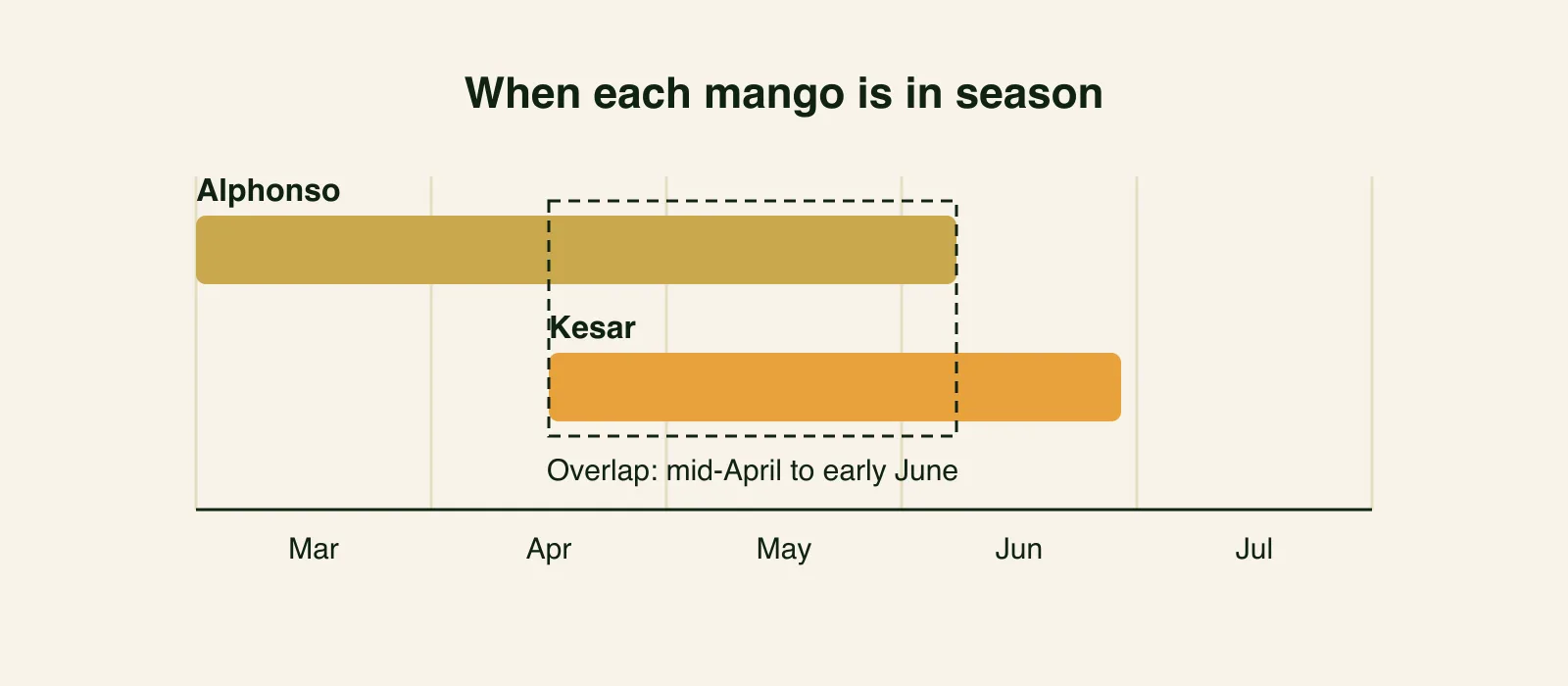
The seasons only partly overlap, so for stretches of the summer the calendar decides for you. Alphonso typically starts in March and fades by late May or early June. Kesar runs from mid-April to late June. In March and early April, Alphonso is the only premium option on the table; from mid-June onward, it is Kesar. The genuine head-to-head window is mid-April through May — which is also when both varieties are at their peak, so it is a good problem to have.
Why our family grows Kesar
Our orchard is in Marathwada, where Dr Pravin Kasliwal planted the first trees more than forty years ago; two generations of the family have worked it since. The dry Deccan climate suits Kesar, and the variety suits how we want to sell fruit — certified organic, naturally ripened, ₹300 per kg shipped across India, with a 1 kg trial box if you would rather test the claim than take our word for it.
When would we point you at Alphonso instead? When it is March and you cannot wait for the Kesar window to open, when the box is a gift where the name carries weight, and when melting texture matters more to you than aroma and price. The rest of the time, we think the sensible money is on Kesar — it arrives slightly firm and finishes ripening on your counter in a few days.
FAQ
Questions readers often ask
Keep Reading
More stories from the orchard
How to Tell if a Mango Was Ripened with Carbide — 5 Home Tests
Five checks — water, skin, stem, cut and taste — that catch most carbide-ripened mangoes, what each one can and cannot prove, and why the difference exists at all.
Abhilash Kasliwal
7 min read
How to Ripen Kesar Mangoes at Home — A Day-by-Day Guide
Firm Kesar mangoes ripen on the counter in 2–4 days. When the rice jar helps, when the fridge ruins fruit, and how to tell a Kesar is ready by smell, give and colour.
Abhilash Kasliwal
6 min read
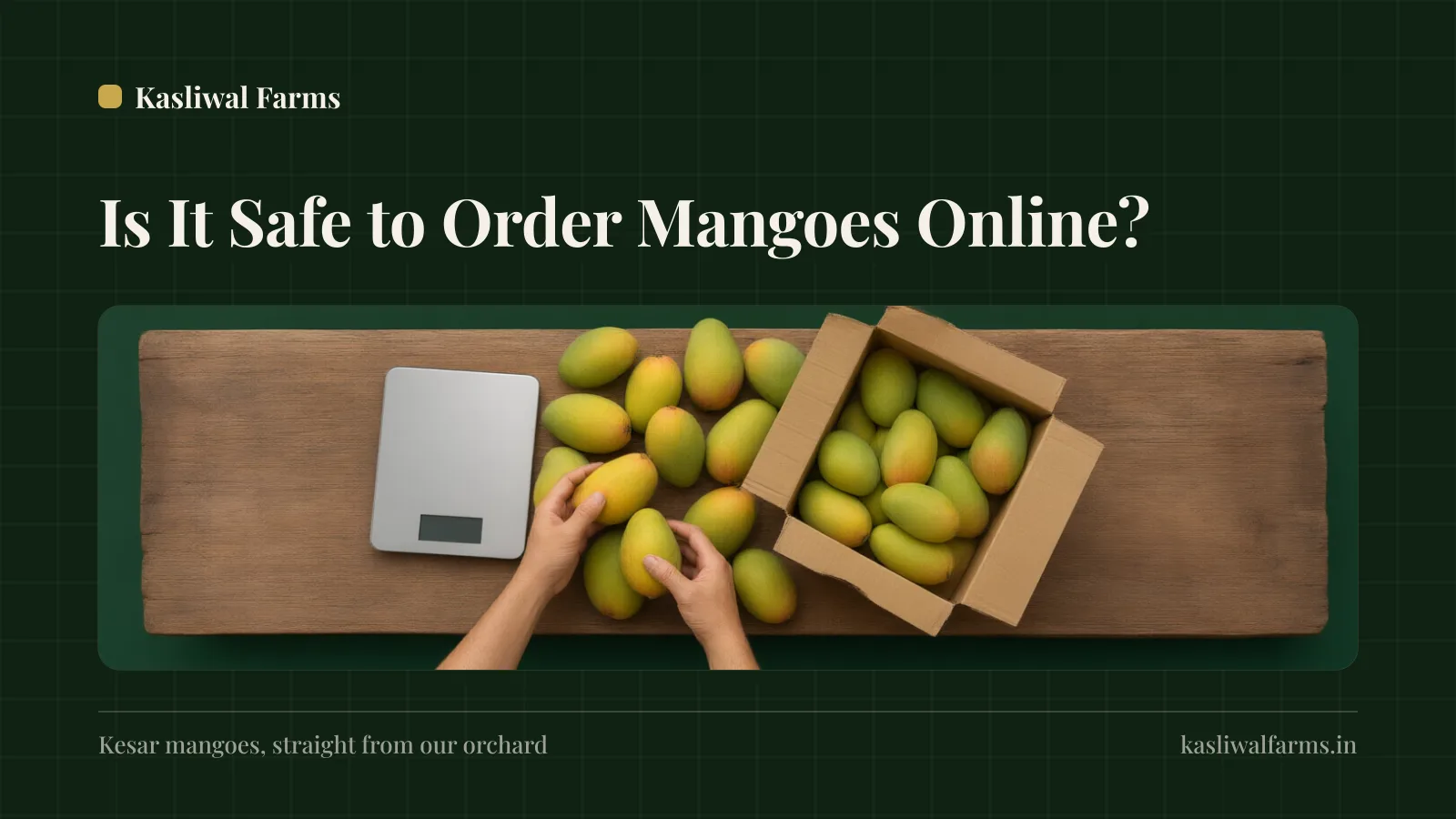
Is It Safe to Order Mangoes Online in India? A Farmer's Honest Checklist
Yes, if you check five things before paying. A farmer's checklist for spotting honest mango sellers — named farms, firm-fruit honesty, stated weights, a real damage policy and season discipline.
Abhilash Kasliwal
6 min read