
What to Do with 5 kg of Kesar Mangoes: Aamras, Pulp and a Week of Plans

Abhilash Kasliwal
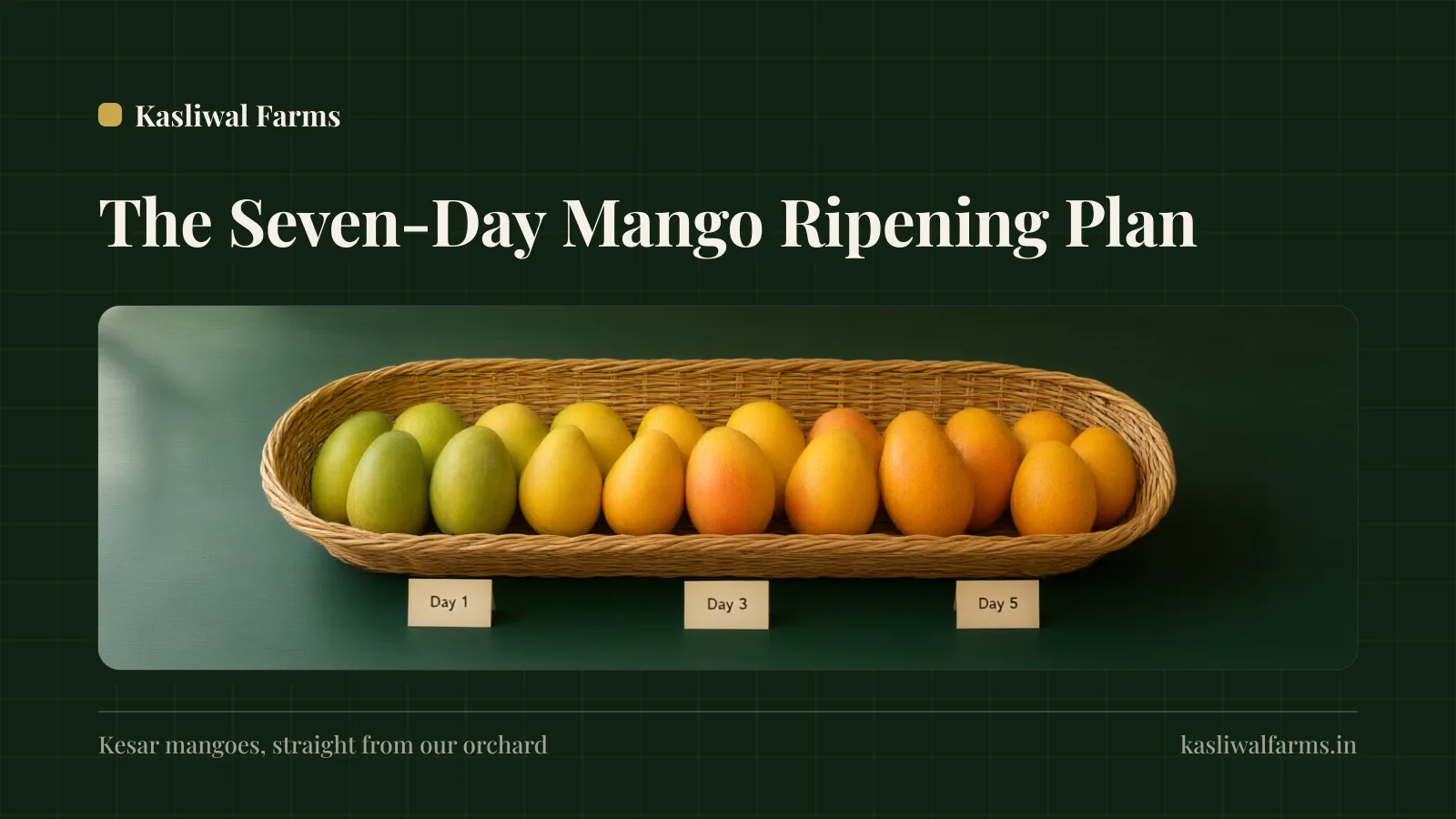
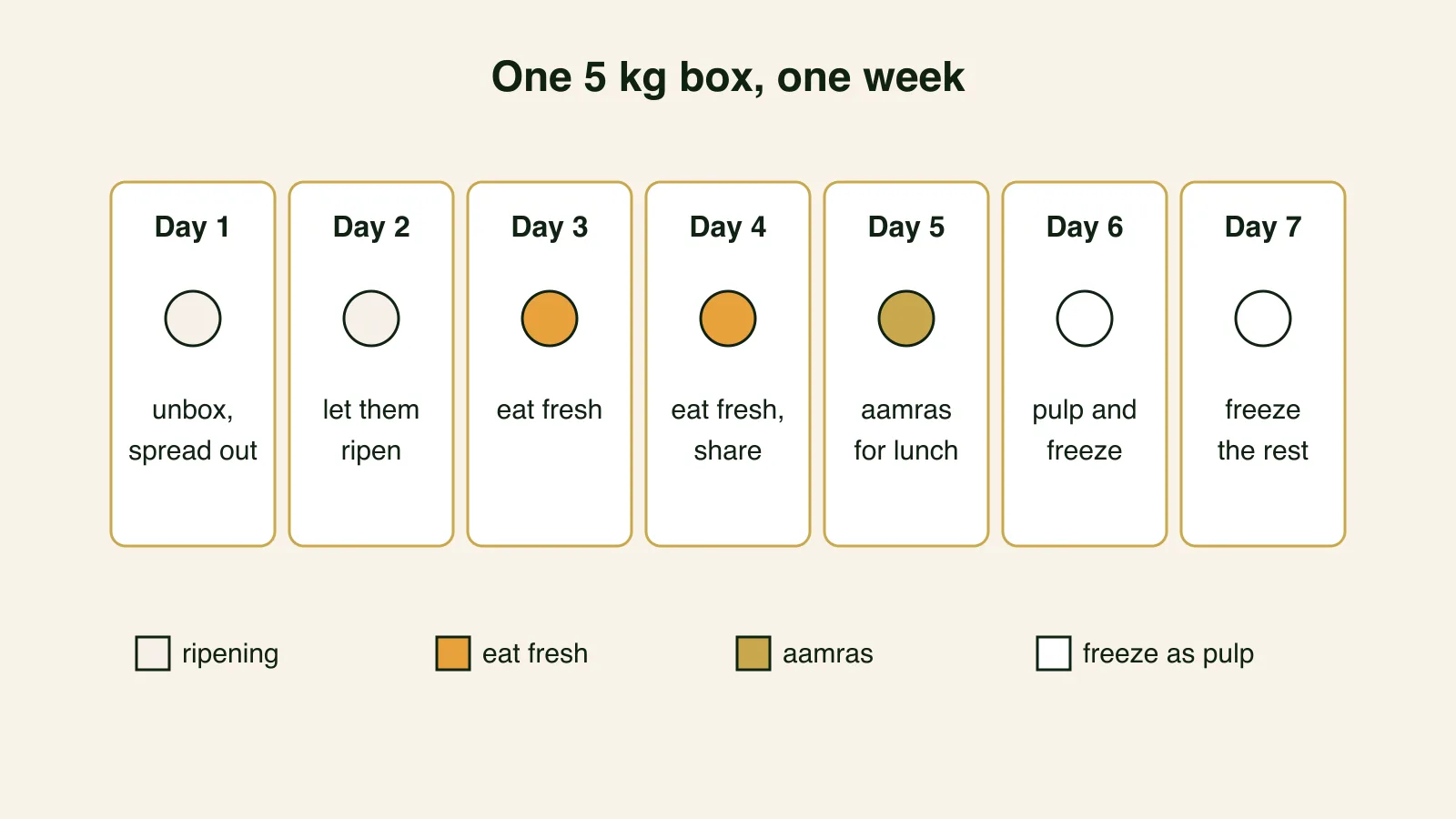
A 5 kg box holds 20 to 30 Kesar mangoes, and the plan that gets through them with nothing wasted runs like this: let the fruit ripen for the first day or two, eat fresh through the middle of the week, make aamras on the day several ripen together, and pulp-and-freeze whatever is left, since frozen pulp keeps 6 to 8 months. This is how mango gluts get handled in our own kitchen, and it is the reason the 5 kg box carries a 25% discount: the box only makes sense if the fruit gets used, and this plan uses all of it.
Why Kesar is the aamras mango
In Gujarat and much of Maharashtra, aamras means Kesar, and the reasons are practical rather than sentimental. The flesh is a deep saffron colour that survives pulping, the aroma is strong enough to carry through a bowl, the sweetness comes balanced with a faint tang so the dish does not taste flat, and the fibre is low, which gives you a smooth pulp without straining. Alphonso deserves its reputation, and its buttery richness makes a wonderful aamras too, at a price: online Alphonso typically runs near ₹1,000 a kilo against Kesar's ₹300. When a dish needs a kilo of fruit at a time, flavour per rupee starts to matter, and that argument Kesar wins comfortably. The longer story of what our region does to this variety is in Gir Kesar vs Marathwada Kesar.
The week, day by day
Farm-direct fruit arrives firm on purpose, picked mature but shipped before softening, so the box ripens in your kitchen rather than in a courier van. That staggering is what makes a 5 kg box manageable: the fruit does not all demand attention on the same day.
Day 1 is unpacking: single layer, room temperature, out of the fridge, on a newspaper or a tray. Days 2 and 3 are ripening days, and the signal to watch for is fragrance at the stem end plus a gentle give under the thumb. From day 3 or 4 onward, eat the ripest fruit fresh, soaked and chilled; the case for the soak is in why do Indians soak mangoes in water. Around day 5, several fruits usually ripen at once, and that cluster is your aamras day, because aamras is the best thing to do with four ripe mangoes at the same time. Days 6 and 7 are for the stragglers: anything fully ripe that will not be eaten today gets pulped and frozen before it crosses from ripe to overripe.
Aamras, the way we make it at home
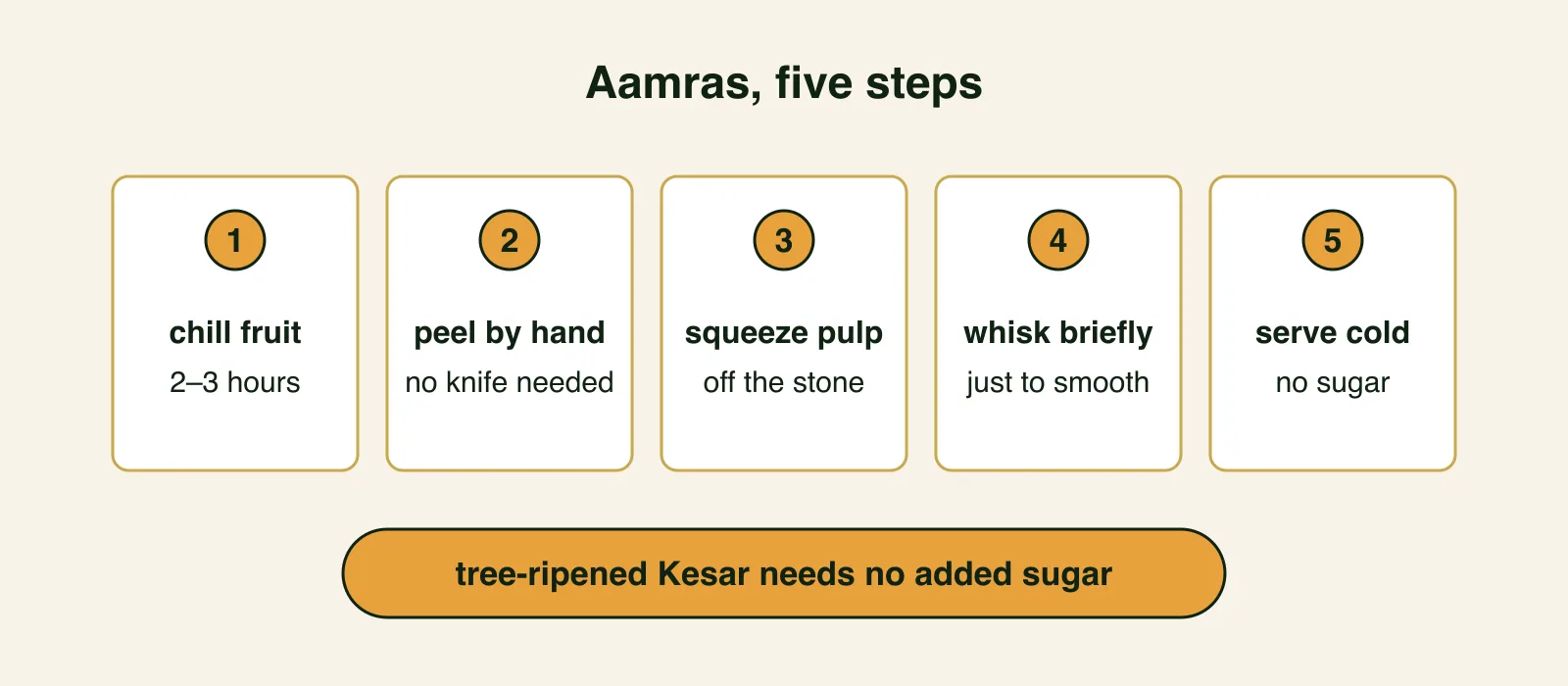
Chill the fruit for two to three hours first, because aamras is a cold dish and warm pulp goes dull. Peel by hand, working over the bowl so nothing is lost, and squeeze the pulp off the stone with your fingers; a Kesar's low fibre means the flesh leaves the stone cleanly and no knife or strainer is needed. Whisk briefly, just enough to smooth the pulp, since long blending aerates it and thins the texture. Then serve cold, with puris or with a plain meal.
No cream, and no sugar if the fruit ripened properly. That last point is the quality test hiding inside the recipe: a mango that matured on the tree has converted its starch fully and needs nothing added, while aamras that requires sugar is usually telling you the fruit was picked too early or ripened artificially for colour. If your aamras needs help, the problem was in the fruit, and it was there before the fruit reached your kitchen.
Aamras, shake or pulp: matching the dish to the fruit
Each preparation wants the fruit at a different stage. Aamras wants fully ripe fruit, fragrant and soft, because the dish is nothing except the fruit. A shake forgives slightly less ripe fruit, since cold milk rounds the edges, and if the fruit is good it needs no sugar either. Pulp for freezing should come from fully ripe fruit too; freezing preserves the state the fruit was in, and it cannot improve a mango that went into the freezer underripe. The rule across all three: ripeness questions get settled before the preparation starts, at the fruit bowl.
Freezing pulp properly
Peel, pulp, pack airtight, freeze. Fill containers nearly full so there is little air against the surface, or freeze flat in zip bags so portions snap off cleanly, and label the date; the pulp holds its colour and flavour for 6 to 8 months, which carries mango season into the winter.
Never freeze whole mangoes. Water expands as it freezes, and inside an intact fruit the growing ice crystals rupture cell walls throughout the flesh, so what thaws is a sagging, watery version of what went in. Pulping first sidesteps the problem because the structure is already broken by design, and a pulp's texture survives the freezer in a way an intact fruit's cannot.
Ideas that need exactly one mango
Not everything requires a batch. One ripe Kesar makes a kesar mastani, the Pune way, blended thick with milk and topped with dry fruit. One makes a breakfast bowl with dahi or overnight oats. One, sliced and chilled, is the simplest dessert in the house all summer, and mango with hot puris is a meal on its own. A family that keeps one-fruit ideas in rotation clears a 5 kg box faster than they expect; the arithmetic of counts, portions and pulp yield is laid out in how many Kesar mangoes are in 1 kg.
The 5 kg box exists because this plan works, and it is priced accordingly: ₹1,125 at 25% off, against ₹1,500 at the per-kilo rate. If you would rather test the fruit before committing to a week of it, the 1 kg trial box is the honest place to start.
FAQ
Questions readers often ask
Keep Reading
More stories from the orchard

Kesar vs Alphonso — Which Mango Should You Buy?
Both are elite mangoes. Alphonso brings buttery dessert richness at ₹1,000-plus per kg online; Kesar brings saffron aroma and a sweet-tang balance at a third of the price. Here is how to choose.
Abhilash Kasliwal
6 min read

How to Tell if a Mango Was Ripened with Carbide — 5 Home Tests
Five checks — water, skin, stem, cut and taste — that catch most carbide-ripened mangoes, what each one can and cannot prove, and why the difference exists at all.
Abhilash Kasliwal
7 min read

How to Ripen Kesar Mangoes at Home — A Day-by-Day Guide
Firm Kesar mangoes ripen on the counter in 2–4 days. When the rice jar helps, when the fridge ruins fruit, and how to tell a Kesar is ready by smell, give and colour.
Abhilash Kasliwal
6 min read